
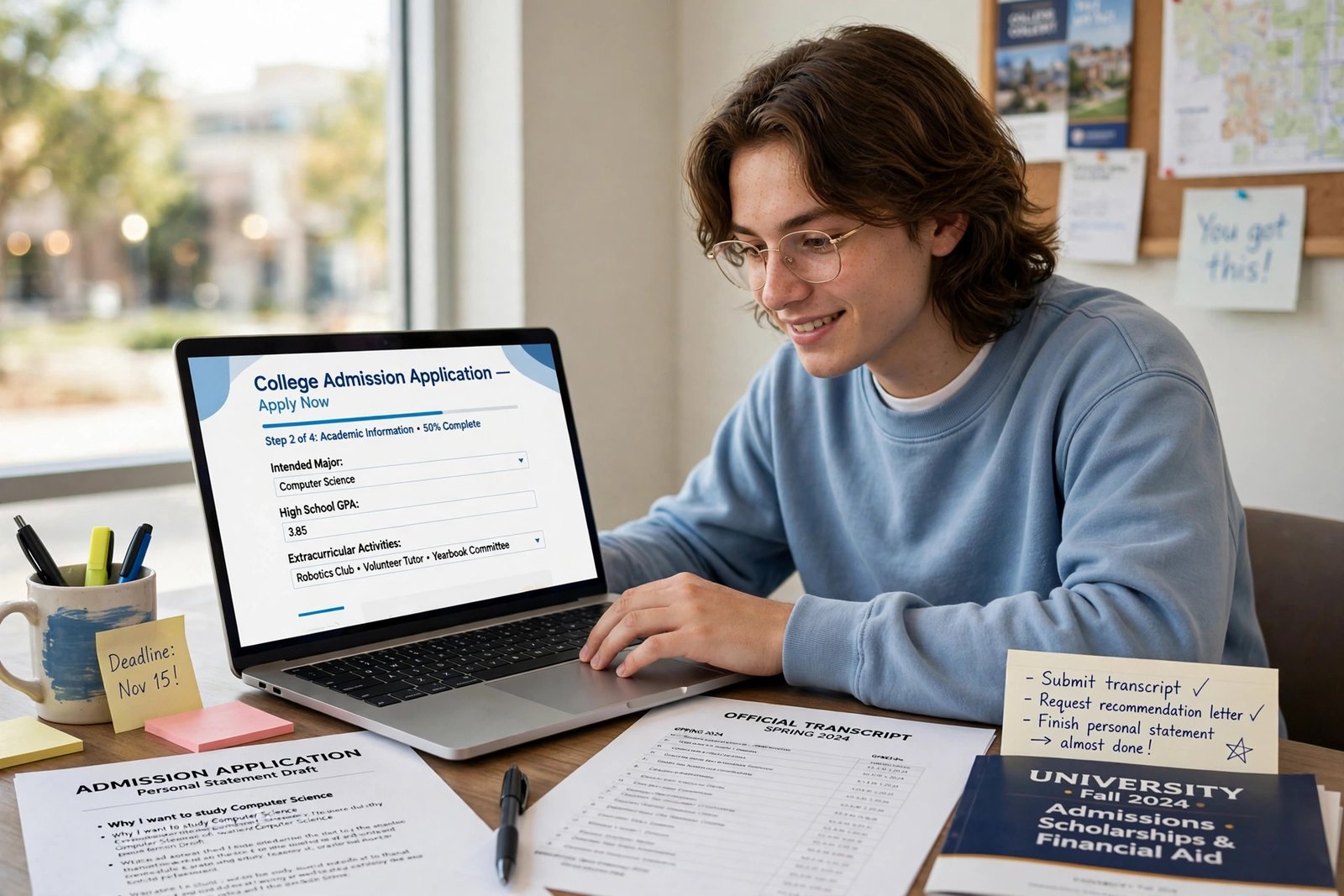
Applying to an online college in the United States as an international student is very different from applying as a domestic student, but it is not impossible. In short, most online programs ask for proof that you finished secondary school, transcripts or records from any previous college study, evidence of English proficiency, and a completed application with identification documents. Some programs add entrance tests, a personal statement, or an interview. This guide explains each requirement in plain language, what documents you should prepare early, and how to avoid the delays that most often slow international applications down. EduCampues is an independent guide, not a college, so always confirm the exact requirements with the institution you plan to apply to, because they vary widely.
Start With the Basics: Who Can Apply
Most online colleges accept international applicants, including students who live outside the United States and students who already live in the United States on another type of visa. The important difference is usually not whether you can apply, but what the college needs to verify. Because you studied outside the US system, admissions teams often need extra time to understand your qualifications. That is why applying early matters so much. If a program is fully online and does not require you to travel to campus, you may not need a student visa for that program, but visa rules are complex and change, so do not assume anything about immigration status. Check with the college’s international admissions office and, if needed, a qualified immigration adviser before you enroll.
Academic Records and Transcripts
Your academic history is the heart of your application. Colleges usually ask for official transcripts or mark sheets from secondary school and from any college or university you attended before. If your documents are not in English, you will normally need a certified translation as well. Some colleges also ask for a credential evaluation, which is a report from an approved evaluation service that explains how your qualifications compare to US qualifications. This step can take weeks, so start it as soon as you shortlist colleges. Keep scanned copies of everything, note the exact name spelling used on your records, and make sure the name on your application matches your passport. Small mismatches in names or dates are a common cause of delays.
English Language Requirements
Most US colleges require international students whose first language is not English to show English proficiency. Common tests include TOEFL, IELTS, Duolingo English Test, and Pearson PTE Academic, but not every college accepts every test, and minimum scores differ by program. Some colleges waive the test if you studied in English for several years, completed a degree in English, or come from a country where English is an official language, but waivers are never automatic. Check the waiver policy on the college’s own website and keep your test score report ready to upload. If your score is close to the minimum, ask whether the college offers conditional admission or an English pathway, because some do and some do not.
Standardized Tests, Statements, and References
Many online undergraduate programs no longer require SAT or ACT scores, and many graduate programs have made GRE or GMAT scores optional, but this varies by college and by field. Read the program page carefully rather than assuming a test is required or waived. You may also be asked for a personal statement, an essay about your goals, or a resume. Graduate programs often ask for one or two letters of recommendation from teachers or employers who know your work well. Give your referees plenty of notice, tell them the deadline, and explain the program in a short note so their letter is specific. A strong, honest statement that explains why you chose online study and how you will manage it is often more useful than a long list of achievements.
A Practical Checklist
| Requirement | What to prepare | Common pitfall |
|---|---|---|
| Identity | Passport copy and application details that match it exactly | Name spelling differences |
| Transcripts | Official records plus certified translations if needed | Unofficial screenshots instead of official copies |
| Credential evaluation | Evaluation report from a service the college accepts | Starting this step too late |
| English test | Valid score report or a written waiver request | Assuming a waiver applies |
| Application form | Complete answers, statement, and references | Missing deadlines in different time zones |
Tuition, Deadlines, and Time Zones
International tuition and fees vary greatly by college, program, and whether you study part time or full time, so treat any figure you see online as a general guide only and confirm the current cost with the college before you apply. Some colleges charge the same online tuition to all students, while others charge different rates, and additional fees for technology, proctored exams, or course materials can add up. Deadlines also vary, and many online programs have several start dates a year, which gives you flexibility but also makes it easy to miss a cutoff. Convert deadlines to your local time zone, set a reminder a week early, and submit at least a few days before the final date so you have time to fix a missing document.
Practical Tips for a Smooth Application
First, shortlist three to five colleges rather than applying everywhere, and read each one’s international admissions page in full. Second, create a simple folder for each college with its requirements, deadlines, and login details. Third, email the admissions team with one clear question at a time if something is unclear, and keep their replies. Fourth, be honest about gaps in your study history or low grades, because a short, calm explanation is better than leaving a gap unexplained. Finally, remember that EduCampues cannot enroll you or guarantee admission, as explained on our About Us page, and our Disclaimer explains why you should verify every detail with the institution itself.
Frequently Asked Questions
Do international students need a visa for a fully online degree? It depends on the program and on where you live and study. Some fully online programs do not require travel to the US, while others include residencies or exams that may have immigration implications. Always check with the college’s international office before enrolling.
Do I always need a credential evaluation? Not always, but many colleges require one for qualifications earned outside the US, especially for graduate admission. Ask the college which evaluation services it accepts and start early, because evaluations can take several weeks.
Can I apply if my English test score is below the minimum? Sometimes, yes, through conditional admission, an English pathway, or by retaking the test. Some colleges also offer waivers in specific cases. Do not assume you will be admitted with a lower score; ask the admissions team directly.
How long does an international application take? It often takes longer than a domestic application because of transcript evaluation, translations, and test reporting. Starting three to six months before your intended start date is a sensible guide for most students, but deadlines vary by college.
What if my documents are in another language? You will usually need a certified English translation in addition to the original. Use a translator or service the college recognizes, and keep both the original and the translation in your application folder.
Final Thoughts
Applying as an international student takes more preparation, but it is mostly a matter of organization: clear documents, an accepted English test, and early contact with admissions teams. Choose colleges that answer your questions clearly, compare their requirements side by side, and do not rush a decision based on a single advertisement or ranking. With the right preparation, online study can be a flexible way to earn a US degree from where you live, on a schedule that fits your life.
3 thoughts on “Online College Admission Requirements for International Students (2026 Guide)”